25 Beautiful Korean Fonts for Branding and Logos in 2026
korean fonts are more versatile than many designers realize – from clean sans to expressive display faces, Hangul typefaces can define a brand’s voice. In this guide we’ll showcase 25 curated picks and explain when to use each style.
Whether you need a neutral Korean type for UI, a stylized Hangul script for packaging, or web-safe fonts for localization, these selections cover logos, editorial, and digital design. Each entry includes usage notes, pairing suggestions, and licensing tips to help you choose the right Korean typography.
1. Korean Font
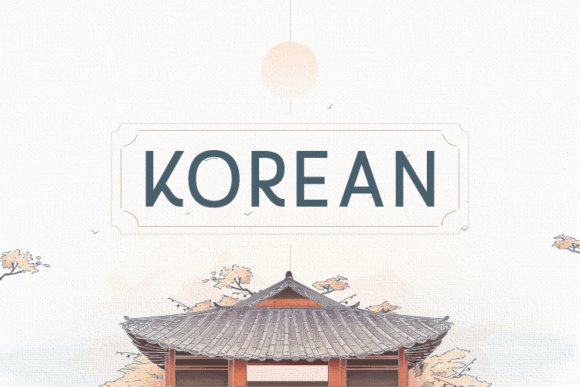
Korean is a modern, versatile sans serif that balances clean geometry with subtle warmth. Its open counters and even stroke widths give it excellent legibility across digital and print, making it a reliable choice for body copy as well as strong display headlines. As part of a broader exploration of korean fonts, this face is one of those neutral-but-distinct options that anchors a layout without feeling anonymous.
The typeface performs particularly well at medium and large sizes: headings read crisp, subheads remain calm, and short blocks of text retain clarity. It pairs naturally with decorative scripts or soft rounded display faces for contrast, and its straightforward characters make it easy to tune letterspacing for tight layouts or wide editorial spreads. Designers looking to mix Latin copy with Hangul wordmarks will find it a steady companion when creating bilingual compositions.
Technically, Korean feels polished – consistent kerning, predictable metrics, and a range of usable weights (if available) help speed up workflows. It shines in wedding invitations, corporate identity systems, website headers, and packaging where a contemporary, approachable tone is desired. If you need a safe, stylish sans that steps out of the way to let content shine, Korean is a strong candidate.
My Recommendation: I’d reach for Korean when I need a dependable, modern sans for brand work, editorial layouts, or event collateral. Its clarity and balanced design let logos and photos take center stage while preserving typographic character. For client projects that demand clean readability across screens and print, this font is a go-to.
2. Korean Strawberry Milk Font
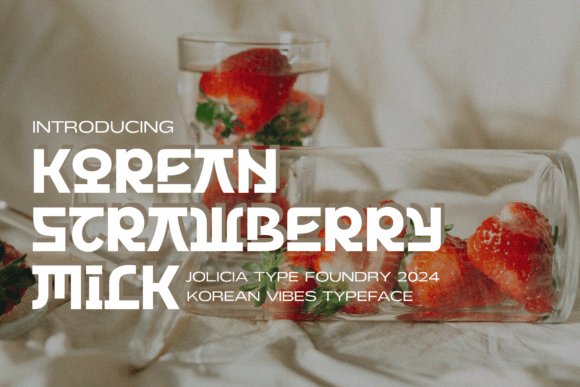
Korean Strawberry Milk is a playful display font with rounded terminals and a soft, friendly voice. Its letterforms carry a gentle bounce and slightly exaggerated curves that evoke confectionery packaging and whimsical headlines, lending an instant mood of warmth and approachability. The design feels lovingly handcrafted while remaining tidy enough for professional applications.
This face excels in fun, identity-driven contexts: product labels, children’s editorial spreads, cafe menus, and social media graphics where a sweet, optimistic tone is wanted. It complements pastel palettes and textured backgrounds well, and pairs nicely with neutral sans-serifs when you need to ground the design. Use generous tracking for longer copy and tighter spacing for punchy display uses.
On the technical side, Korean Strawberry Milk works best at display sizes where its personality reads clearly; at small sizes the rounded details can lose some definition. Consider it a headline or logo tool rather than a body text solution. Its charm is its selling point – when you want designs that feel handcrafted and friendly, this font delivers a memorable, culturally inspired aesthetic.
╰┈➤ Download Korean Strawberry Milk Font
My Recommendation: I would use Korean Strawberry Milk for branding projects that need a cute, memorable mascot-like voice – think boutique cafés, dessert packaging, or playful event promos. It brings instant personality and pairs well with minimal layouts to avoid visual clutter. For anything that benefits from a warm, approachable look, this font is a delightful pick.
3. Korean Power Font
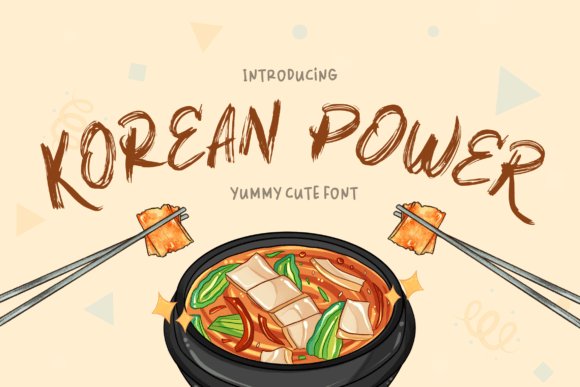
Korean Power is a dynamic brush-script that channels raw, expressive strokes into readable letterforms. The natural ink-like texture and variable stroke widths create a sense of motion and immediacy, which makes it excellent for statement graphics and bold apparel prints. It retains enough structure to read comfortably in short headlines while keeping an artisanal edge.
Use this font when you want high-energy, handcrafted flair: posters, merchandise, event flyers, and editorial spreads that benefit from a bold, human touch. Pair it with restrained geometric sans-serifs to let the brushwork pop, or layer it over textured backgrounds for a streetwise, authentic feel. For t-shirt designs and signage, its personality can become the focal point of the composition.
Keep in mind that very small sizes will lose the nuances of the brush texture, so reserve it for display work. Also watch contrast and background noise so the strokes don’t compete with imagery. When you need spirited, hand-painted character rather than sterile perfection, Korean Power adds energy and visual character to your layouts.
╰┈➤ Download Korean Power Font
My Recommendation: I’d pick Korean Power for projects that demand attitude and handcrafted energy, such as posters, band art, or apparel graphics. It injects personality instantly and pairs nicely with clean supports to avoid visual overload. For expressive campaigns where raw motion and human marks matter, this brush font is a thrilling choice.
4. Hyunso Korean Style Font
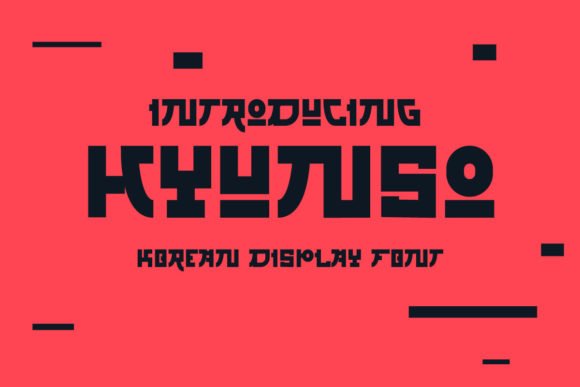
Hyunso Korean Style is a bold display face that channels mid-century East Asian signage with a modern twist. Among korean fonts, it stands out for its heavy weight, geometric counters and slightly condensed proportions that make headlines pop without feeling cramped. The type’s blunt terminals and confident strokes read clearly at large sizes and carry a retro-yet-current personality.
On a technical level the letterforms emphasize strong verticals and broad counters, which improves legibility for Hangul syllables while keeping a decorative edge. It works especially well for poster art, album covers and logos where you need a commanding display presence; pair it with a neutral humanist sans for long-form copy. Hyunso’s design adapts nicely to bold color palettes and textured backgrounds used in contemporary branding.
Practical considerations: expect a single solid weight optimized for display rather than body text, so use it primarily at headline scale or on hero imagery. Check kerning for composite headlines and consider adding subtle tracking for all-caps settings to avoid crowding. Licensing is typically straightforward for commercial use, but confirm webfont and app embed options if you need cross-platform delivery.
╰┈➤ Download Hyunso Korean Style Font
My Recommendation: I’d reach for Hyunso Korean Style when a project demands bold personality-think film posters, storefront signage, and music branding. Its retro inspiration gives immediate character while remaining surprisingly versatile across modern layouts. Use it sparingly for impact and pair it with a clean body face to balance visual weight.
5. Kinderland Kr Font
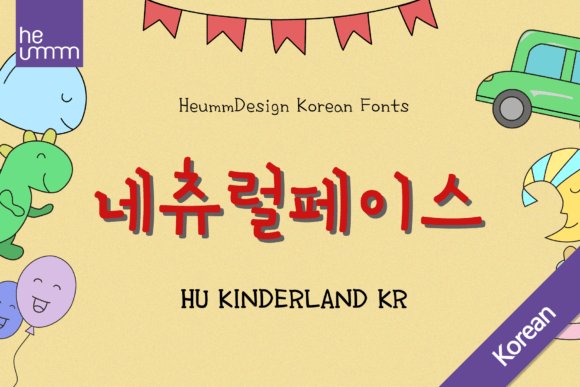
Kinderland Kr is a warm, handwritten script that captures the tidy spontaneity of a child’s writing while remaining surprisingly controlled. The strokes are compact and slightly rounded, which produces an approachable, innocent voice ideal for kids’ products, informal packaging, and cheerful editorial accents. The Korean adaptation preserves Hangul structure but keeps the playful, human touch of the original Latin shapes.
What sets this release apart are the two ‘‘white’’ weights-the outline-only styles that render characters as bordered forms without fills. Those variants create a light, airy aesthetic useful for layered layouts, embossed print effects, or when you need a friendly type that won’t overpower colorful illustrations. Tight letter spacing and modest variance in stroke width make it readable at small sizes and charming at display scale.
Because Kinderland Kr feels handmade, it pairs well with simple geometric sans-serifs when you need contrast between headline warmth and body neutrality. Pay attention to line-height with the white weights so the outlines don’t visually collide on dense text blocks. Overall, it’s ideal for children’s books, toy labels, UI microcopy in family-focused apps, and any project seeking an innocent, humanized tone.
╰┈➤ Download Kinderland Kr Font
My Recommendation: I’d use Kinderland Kr for projects that need a friendly, handcrafted voice-kids’ editorial spreads, playful branding, and boutique packaging. The outline weights are a creative asset for layered designs and tactile print finishes. It’s my go-to when I want warmth without sacrificing clarity.
6. Special Movie Kr Font
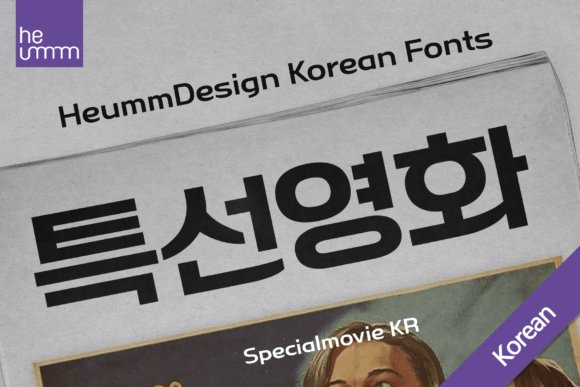
Special Movie Kr is a wide, square-minded sans serif designed with cinematic nostalgia in mind. Its geometry favors straight lines and boxed counters, notably rendering the syllable-initial consonants with fuller modules to boost recognition in display settings. The circular glyph ‘ㅇ’ becomes almost square, harmonizing with the typeface’s overall solid, pared-back aesthetic.
The terminals taper slightly to create narrow stroke ends that read crisply on screens and in print, lending the face a streamlined, industrial sensibility. This clarity makes it a natural choice for headlines, title treatments, and poster design where rapid character recognition matters. Because of its broad proportions, Special Movie Kr commands space and can carry short taglines or marquee text without losing presence.
For pairing, combine it with a neutral body sans or a light humanist face to avoid visual competition; spacing tweaks are often needed due to its wide letterforms. It performs well across motion graphics, packaging, and signage thanks to consistent stroke widths and strong baseline rhythm. Licensing typically supports commercial use, but confirm webfont and broadcast terms for motion projects.
╰┈➤ Download Special Movie Kr Font
My Recommendation: I recommend Special Movie Kr when you want a retro-cinematic feel with modern readability-film posters, streaming thumbnails, and bold branding applications. Its square forms give instant personality while remaining highly legible at scale. Use it for short, impactful copy where presence and clarity are priorities.
7. Discopangpang Kr Font
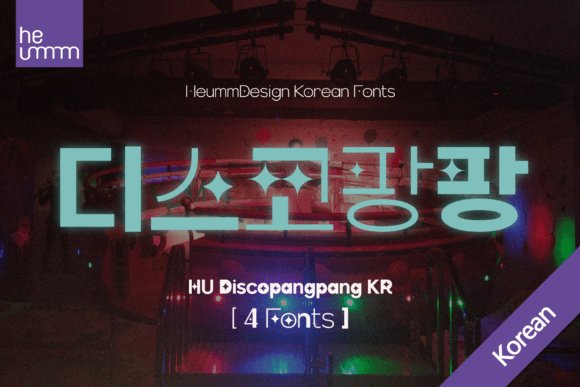
Discopangpang Kr channels the kinetic energy of Tagada rides into type, giving designers a display face that feels playful and unpredictable. As a standout member of contemporary Korean type design, it brings an instant personality to headlines, posters, and event graphics – ideal when you want to communicate fun, motion, or youthful exuberance with your typography. This font family is one of the more expressive korean fonts available for display uses, and it reads like a visual exclamation point when set large.
Technically, the family mixes conservative Light and Extrabold weights with deliberately eccentric Left and Right variants whose strokes bias heavily to one side. Those asymmetrical stroke tensions create rhythmic negative space inside Hangul syllables and Latin glyphs, so spacing and kerning should be adjusted at display sizes to preserve legibility. Because the quirky shapes rely on strong silhouettes, Discopangpang performs best at medium-to-large sizes where its bounce and character are visible.
For pairing, keep body text neutral – a restrained grotesque or neutral humanist will balance the typeface’s theatricality without competing for attention. Use it for festival posters, product launch hero art, youth branding, or game UI headings where an energetic, informal voice is desired. Note that the eccentric Left/Right styles are best used selectively as accents rather than for long sequences of text.
╰┈➤ Download Discopangpang Kr Font
My Recommendation: I’d reach for Discopangpang Kr when a project needs instant, playful attitude-think event posters, toy packaging, or promotional banners. Its asymmetrical styles give brand assets a memorable silhouette while Light and Extrabold maintain usable weight range. I love it for campaigns aimed at younger audiences because it conveys motion and fun without feeling clichéd.
8. Mobydick Kr Font
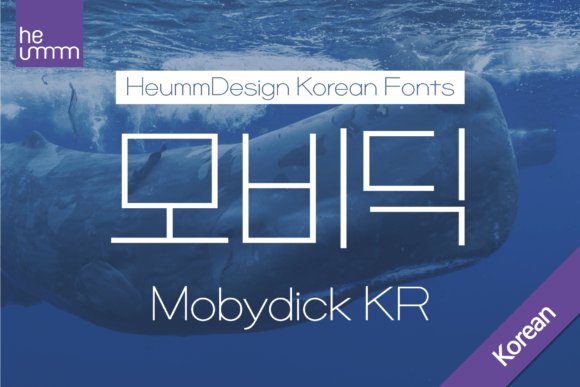
Mobydick Kr is a clean Korean sans-serif designed for broad usability across both print and digital interfaces. The face balances open counters and steady stroke terminals to maximize clarity in Hangul syllable blocks, making it a reliable choice for headlines, captions, and short paragraphs. Its neutral construction helps it sit comfortably within branding systems where unobtrusive, modern typography is required.
On a technical level, Mobydick Kr shows careful attention to spacing and hinting, so it renders crisply at small sizes on screens and maintains even texture in long-form layouts. The rhythm of its syllable shapes keeps reading fatigue low while preserving a contemporary aesthetic, which is why it’s often chosen for UI, editorial, and corporate identities. Multiple weights lend flexibility for hierarchy without needing additional type families.
Pair Mobydick Kr with an expressive display face or a subtle script for contrast; in restrained colorways it elevates minimalist designs, while in colorful layouts it provides a dependable backbone. For multilingual projects, test the Latin metrics against Hangul blocks to ensure harmonious alignment. Overall, it’s a practical, well-crafted sans that emphasizes legibility and modern neutrality.
My Recommendation: I would use Mobydick Kr for user interfaces, corporate websites, or editorial layouts where clarity and consistency matter most. Its neutral voice supports content without drawing attention away from messaging. It’s my go-to when I need a dependable Korean sans for both headings and body copy.
9. Maple Story Font
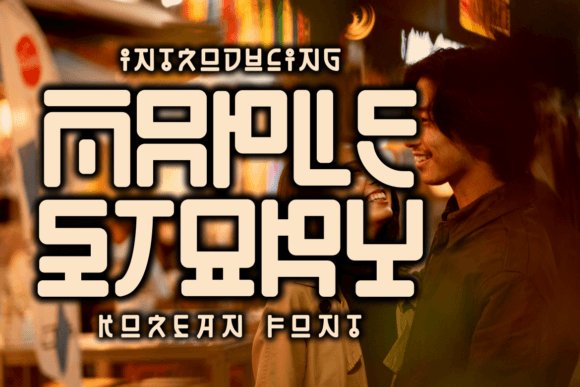
Maple Story delivers a whimsical, Korean-style display with hand-drawn charm that evokes playful branding and storybook aesthetics. Each character features gentle curves and quirky terminals, giving text an approachable, warm personality that works perfectly for children’s books, event invites, and boutique packaging. The overall cadence of the letterforms reads energetic yet refined, striking a balance between cute and sophisticated.
What sets Maple Story apart is its rich set of alternates and ligatures, allowing designers to mix glyph variations for organic, non-repetitive typography. These OpenType features – PUA encoded for easy access – make it straightforward to craft bespoke headlines and playful wordmarks without manual glyph searching. Because alternates are plentiful, the font encourages experimentation: staggered letterforms, ligature swaps, and stylistic sets can create lively logotypes and social graphics.
Use Maple Story as a display accent rather than a body face; its decorative traits shine when large and paired with a simple neutral sans for longer copy. It’s especially effective in projects that aim to convey friendliness, nostalgia, or a handmade feel – think indie brands, seasonal packaging, and creative campaign headlines. Test the PUA glyph access in your design tool to streamline workflow and unlock all decorative possibilities.
My Recommendation: I’d pick Maple Story for projects that need a whimsical, character-driven headline-brand identities for children’s products, boutique packaging, or playful event collateral. Its alternates let you craft custom-looking wordmarks without hiring lettering. Use it sparingly with a neutral body font to keep layouts balanced and lively.
10. Waom Font
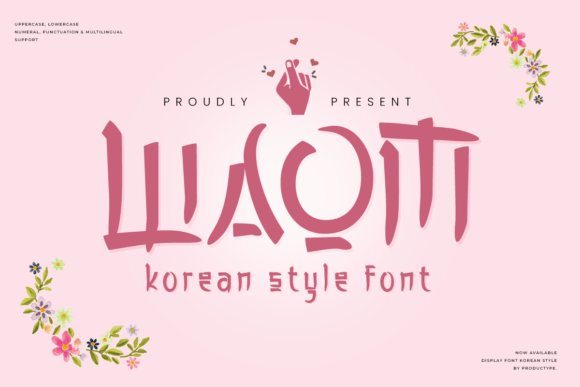
Waom is a display face that reads like a delicate brush poem, its strokes tuned to express tenderness and refined poise. Waom sits among the most graceful korean fonts and Korean-inspired typefaces, balancing soft terminals with subtle contrast to evoke traditional Hangul calligraphy’s warmth without feeling dated.
At display sizes the letterforms sing: each character carries a decorative rhythm that makes logos, wedding invitations, and cultural event posters feel intimate and handcrafted. The font’s spacing favors open counters and generous kerning, so headlines breathe while maintaining an elegant silhouette.
Pair Waom with a neutral grotesque or minimalist serif to let its ornamental shapes take center stage; avoid long body copy and keep it for short, meaningful statements. Designers will appreciate its ability to signal heritage and luxury at once – perfect for boutique branding, editorial covers, and packaging that needs an artful, Korean-tinged voice.
My Recommendation: I would reach for Waom when a project needs a refined, culturally informed display typeface that reads as both modern and handcrafted. Its gentle stroke contrast makes it excellent for premium packaging, event collateral, and boutique identity systems where emotion and elegance matter. Use it sparingly for maximum impact – a headline or logo will let Waom shine without overwhelming supporting text.
11. Tagada Font
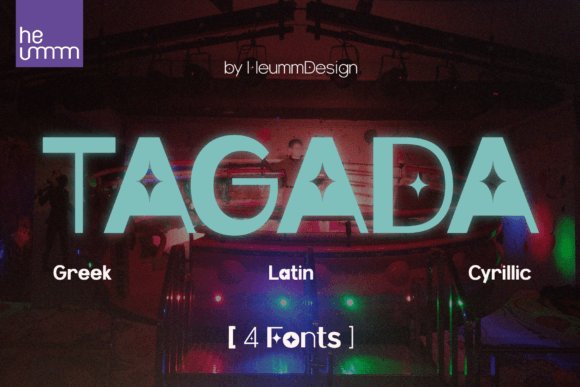
Tagada channels the kinetic joy of fairground rides into letterforms with a bouncy, energetic personality that immediately catches the eye. Named after the lively “Disco Pang Pang,” its construction plays with asymmetric stroke thicknesses and eccentric terminals to create a distinctly playful display voice.
The family includes lighter and extra-bold weights conceived at familiar widths, while the left- and right-biased shapes introduce a deliberate imbalance that reads as movement on the page. This makes Tagada an excellent choice for posters, event branding, and packaging where an animated, youthful tone is needed.
Because of its strong personality, Tagada works best in short bursts: headlines, logotypes, or single-word treatments. For legibility and balance, pair it with a simple geometric sans for body copy or use it in motion graphics where the type’s rhythm can be animated to amplify the ride-like feel.
My Recommendation: I recommend Tagada when you need a headline typeface that injects fun and motion into a design – think festival posters, kids’ product labels, or playful social campaigns. Its eccentric strokes give instant character, but it should be used selectively to avoid visual fatigue. If you want bold personality without complex illustration, Tagada is a go-to for attention-grabbing displays.
12. Sanzyume Font
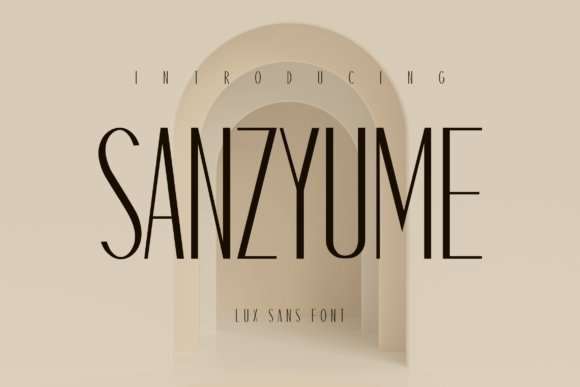
Sanzyume blends Japanese and Korean sensibilities into a clean, fashion-forward sans serif that reads glossy and contemporary. Its restrained geometry and softened terminals create a chic, feminine tone, making it especially suitable for beauty and lifestyle branding that aims for understated elegance.
On cosmetics packaging and editorial layouts Sanzyume performs well at medium-to-large sizes, where its refined proportions maintain legibility while conveying sophistication. The type’s design echoes modern Hangul and kana aesthetics, so it harmonizes nicely in bilingual compositions and K-beauty inspired visual systems.
Use Sanzyume for mastheads, product names, and premium labels paired with muted color palettes and tactile materials to amplify a luxury feel. For extended body text, complement it with a neutral humanist face to keep long reads comfortable while preserving Sanzyume’s stylish headline presence.
My Recommendation: I would choose Sanzyume for fashion and beauty projects that need a polished, contemporary type voice with East Asian nuance. It elevates packaging and editorial work without shouting, making it ideal for cosmetics, boutique branding, and lifestyle blogs. Use it for primary logos and product titles, then support it with a legible body face to create a cohesive, luxe system.
13. Fickle Font – korean fonts Display Typeface
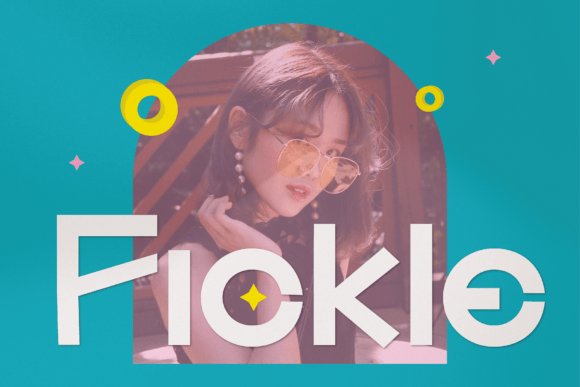
Fickle is a quirky sans-serif display face that channels contemporary Korean visual culture into bold, attention-grabbing letterforms. The type has an offbeat geometry and playful rhythm that reads loud at headline scale, making it ideal for designs that must stop scrolling and hold a viewer’s gaze. As part of the broader conversation around korean fonts, Fickle provides a recognizable aesthetic without sacrificing clarity.
The glyphs combine compact counters with slightly exaggerated terminals, which gives headlines a friendly but confident voice. Use generous tracking for short phrases and tighten slightly for stacked titles; the face performs best in large sizes where its idiosyncrasies shine. Pair Fickle with a neutral humanist or grotesque for body copy to avoid visual competition and to maintain hierarchy.
In practical terms, Fickle is excellent for social assets, thumbnails, packaging, and fashion-focused branding where distinct personality matters. It scales well in vector art and prints cleanly on apparel mockups thanks to its robust stroke contrast. For maximal impact, reserve Fickle for display uses-logos, posters, hero banners-rather than dense paragraphs.
╰┈➤ Download Fickle Font – korean fonts Display Typeface
My Recommendation: I’d reach for Fickle when I need a headline that feels current and culturally attuned without being cliché. Its playful geometry makes it perfect for music covers, social thumbnails, and fashion branding where attitude is the message. Use it sparingly as a focal point and pair it with a restrained text face to keep designs balanced.
14. Korean Font
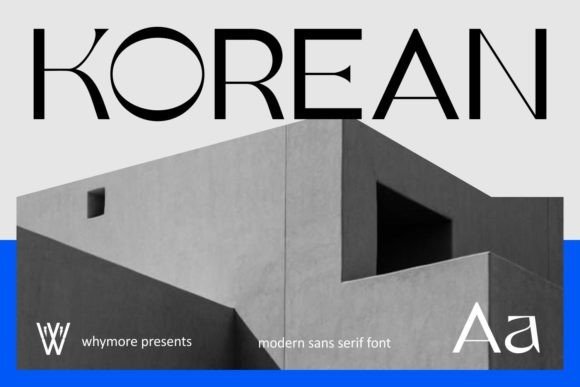
Despite the simple name, Korean is a refined sans-serif crafted for clarity and contemporary appeal. Designed for strong legibility, it works equally well in headlines, logos, and short-form lettering where you need sharp, authoritative presence. Its visual neutrality gives it a modern, almost futuristic air without feeling cold.
The letterforms favor open counters and steady stroke widths that render crisply on screens and in print, so typographic rhythm remains consistent across sizes. Consistent kerning and thoughtfully tuned character pairs ensure clean word shapes for display and signage applications. Designers will appreciate how easily it integrates into brand systems thanks to balanced proportions and available weights.
Use Korean for identity work, editorial mastheads, product packaging, and UI headings where readability and a contemporary look are priorities. It pairs gracefully with softer script or rounded display faces to introduce warmth while preserving structure. Because of its clarity, Korean also performs well in environments that demand quick comprehension, such as wayfinding and promotional banners.
My Recommendation: I recommend Korean when the project demands a timeless and legible sans that won’t distract from content. It’s my go-to for corporate identities, editorial headers, and product labels because it reads reliably at many scales. Pair it with a complementary display for personality or use it alone for a clean, sophisticated system.
15. Korean Lovers Font
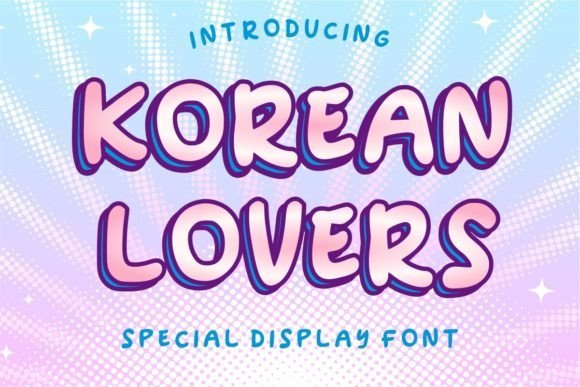
Korean Lovers is a playful display font that radiates warmth and whimsical charm across creative projects. Its rounded terminals and slightly inflated counters create a cheerful, approachable voice that feels handcrafted and joyful. The aesthetic is ideal for lighthearted brands and visual storytelling aimed at younger audiences or lifestyle products.
The face emphasizes friendly curves and open apertures, producing great legibility in short lines and typographic art. Decorative alternates and lively ligatures inject personality into headlines, greeting cards, and T-shirt slogans while keeping the message readable. When printing on apparel, the forgiving shapes translate well to screen-print and embroidery where crispness matters.
Designers will find Korean Lovers fitting for kids’ clothing, magazine headers, event invitations, and social posts that need an upbeat tone. Pair it with a simple sans for supporting text, and use vibrant color palettes to amplify its playful energy. Avoid long paragraphs-this font performs best as a display accent or focal headline.
╰┈➤ Download Korean Lovers Font
My Recommendation: I’d choose Korean Lovers for projects that need instant friendliness and a bit of whimsy, like children’s merchandise or greeting cards. Its charming alternates and rounded forms make layouts feel warm and inviting. Use it as a headline or logo to add personality, and combine it with neutral body text to preserve readability.
16. Korean Taste Font
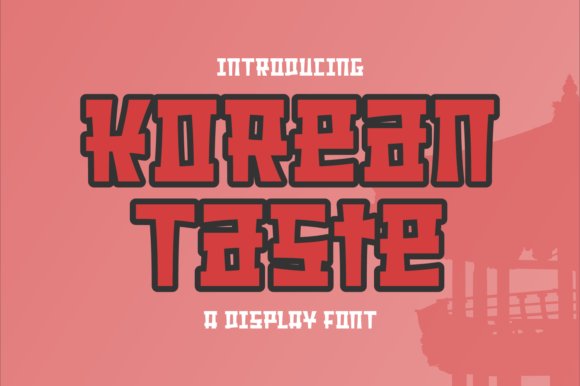
Korean Taste is a refined display face that balances calligraphic tradition with contemporary minimalism. Its delicate terminals and subtle stroke contrasts reference brush-written Hangul while the overall shapes remain tidy and modern, making it an elegant choice for headlines and identity work. As part of a broader exploration of korean fonts, this design reads as culturally informed without being literal, giving projects a sense of provenance without heavy-handed ornamentation.
In practice, Korean Taste performs best at larger sizes where its graceful details can breathe; it’s beautiful on packaging, editorial covers, and boutique branding. Pair it with a neutral sans for body copy to preserve readability while allowing the display letters to sing. Consider muted palettes and generous letterspacing to emphasize its refined curves and to avoid visual crowding.
Technically, the face shows careful hinting for crisp on-screen rendering and seems optimized for print reproduction as well, retaining stroke nuance at high resolution. Because it leans toward the ornamental side of display typography, test logo treatments and lockups to ensure legibility across small-format applications like labels or social icons. Thoughtful kerning and selective use of stylistic alternates (if provided) can elevate its handcrafted character.
╰┈➤ Download Korean Taste Font
My Recommendation: I’d reach for Korean Taste when I need a display face that feels cultured and modern at once – perfect for premium food brands, cultural events, and boutique packaging. Its calligraphic undertones add authenticity without resorting to cliché Hangeul motifs, so it works well when you want a tasteful nod to Korean design. Use it large and give it room; it rewards restraint and careful pairing.
17. Korean Daebak Font
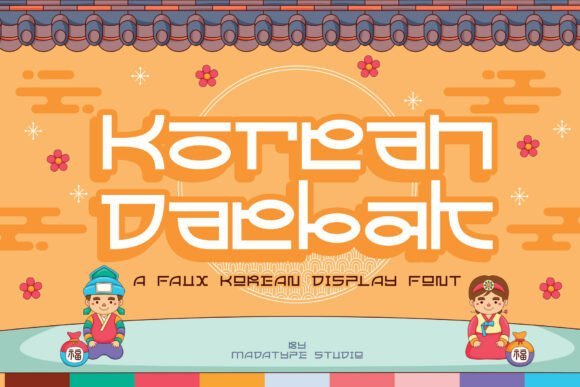
Korean Daebak is a bold faux-Korean display type that channels the energy of Hangeul letterforms through blocky geometry and stylized counters. While it’s not a native Hangul system font, its angular construction and compact rhythm produce a loud, attention-grabbing personality that suits posters, merchandise, and brand statements. The type’s strength lies in its ability to read as East Asian-inspired while remaining a Latin-compatible display solution for visual identity work.
Visually, Daebak thrives in high-impact applications: think storefront signage, T-shirt graphics, and festival posters where maximum presence is required. Designers should balance its density with ample white space and simpler secondary typography to avoid visual competition. Color choices that emphasize contrast – neon accents or saturated primaries against dark backgrounds – amplify its punchy, urban vibe.
Practically, the font includes PUA-encoded glyphs for easier access in standard apps, which simplifies use for quick mockups and print-ready art. Because it leans heavily on stylization, test it at multiple scales and in different media to preserve readability; reserve it for display roles rather than continuous text. Its distinctive silhouette makes it an instant focal point in visual systems that need attitude and immediacy.
╰┈➤ Download Korean Daebak Font
My Recommendation: I’d pick Korean Daebak when a project calls for expressive, streetwise energy – restaurants, apparel drops, and event posters all benefit from its bold attitude. Use it sparingly as a headline or logo element and partner it with a neutral supporting font to keep compositions legible. It’s an excellent choice when you want dramatic, Hangeul-inspired visuals without embedding actual Hangul text.
18. Hu Malrang Kr Font
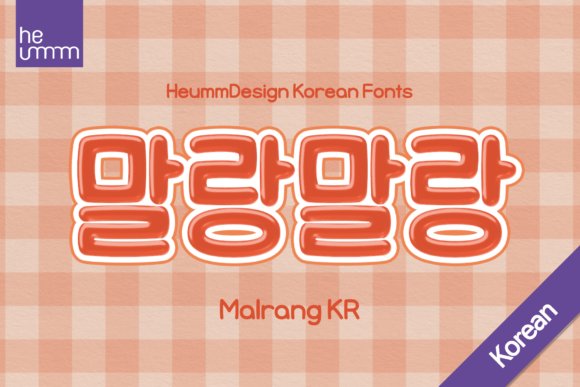
Hu Malrang Kr is a rounded, compact sans-serif designed with tight modules and soft terminals that give text a friendly, contemporary voice. The family offers a variable axis for weight adjustment within Adobe apps, enabling nuanced control over stroke thickness and tonal contrast; six discrete weights are also supplied for environments that lack variable support. Because it includes full Hangul coverage, it’s a practical choice for multilingual UI and editorial systems that need cohesive Korean type.
The face’s gently condensed proportions and close spacing make it space-efficient in dense layouts such as navigation bars, labels, and compact interfaces. Despite the economy of space, the rounded geometry preserves legibility at smaller sizes, making Hu Malrang Kr useful for both UI elements and short-form body copy. Consider slightly increased tracking for extended reading to prevent crowding in long paragraphs.
On a technical level, the variable functionality allows designers to harmonize weight across languages and responsive breakpoints without switching families, which streamlines design systems. It pairs well with humanist or geometric display faces when you want contrast without clashing personalities. Overall, Hu Malrang Kr is a pragmatic, modern sans that balances warmth and efficiency for contemporary Korean typography needs.
╰┈➤ Download Hu Malrang Kr Font
My Recommendation: I’d use Hu Malrang Kr for product interfaces, apps, and corporate communications where clean Hangul support and flexible weights matter. The variable axis is a huge time-saver for responsive design, and the included six weights keep you covered in non-variable editors. Its soft, friendly tone makes it particularly suitable for consumer tech, lifestyle brands, and educational platforms.
19. Blueocean Kr Font
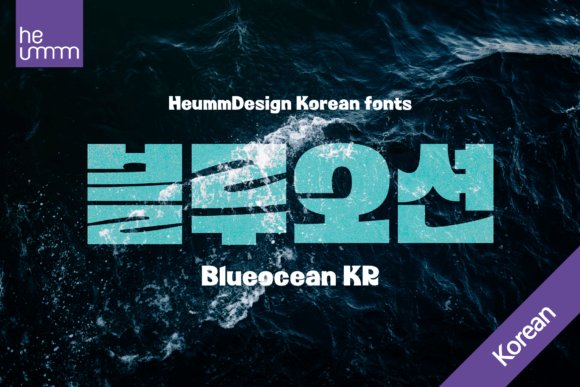
Blueocean Kr is a bold display typeface that imagines waves trapped inside a square glass tube, translating fluid motion into geometric form. The design grafts undulating wave motifs onto a full-square Gothic module, producing letterforms that feel both architectural and organic. Its heavy, characteristic shapes demand attention, making this face ideal for headline use where personality and scale matter.
Technically, the font emphasizes blocky terminals, pronounced stroke widths, and compact counters that read clearly at large sizes. As one of the more expressive korean fonts available for display work, Blueocean Kr brings distinctiveness to posters, signage, and packaging without sacrificing Hangul legibility. Designers will appreciate how the square grid system preserves rhythm across rows of text while the wave details inject motion.
When pairing, choose a neutral sans or fine serif to balance the typeface’s visual weight; avoid small-body text where its heavy modules can clog. The font performs best in high-resolution print or large-format digital canvases and benefits from careful tracking and display-size kerning adjustments. If you need a headline face with sculptural presence and a strong Korean glyph set, this one delivers memorable impact.
╰┈➤ Download Blueocean Kr Font
My Recommendation: I’d reach for Blueocean Kr when a project needs a dramatic, architectural headline that still reads as distinctly Korean. Its wave-infused square forms make it perfect for festival posters, beach or maritime branding, and packaging that must stand out on crowded shelves. Use it sparingly at large sizes and pair it with unobtrusive body typography to preserve clarity and let the design sing.
20. Cheonggye Kr Font
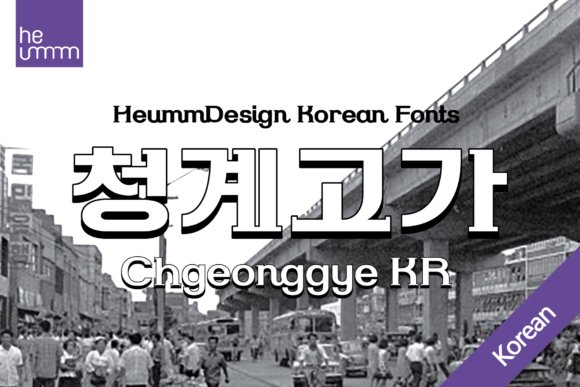
Cheonggye Kr channels a retro slab-serif aesthetic with thick strokes and broad flats that immediately recall mid-century signage and print advertising. The typeface accentuates contrast between horizontal and vertical strokes and uses obtuse right-angled serifs to reinforce a sturdy, mechanical rhythm. Its bold title-oriented construction gives headlines a nostalgic yet authoritative voice.
Designed for display use, the face creates strong horizontal emphasis that works very well in posters, editorial spreads, and logo marks seeking vintage character. The exaggerated serifs and measured stroke differences add personality without veering into ornamentation, so Hangul remains readable even as the letters assert themselves. For contemporary layouts that want a retro flavor, this typeface is an effective bridge between past and present.
Practical considerations include giving the font generous leading and slightly wider tracking at large sizes to avoid overcrowding from its heavy flats. It pairs nicely with a neutral grotesque for supporting copy, and it translates well to both print and high-resolution web contexts when properly hinted. Choose Cheonggye Kr when you want title typography with weight, presence, and a clear vintage identity.
╰┈➤ Download Cheonggye Kr Font
My Recommendation: I’d use Cheonggye Kr when a design needs that warm, retro slab presence-think posters, magazine mastheads, and restaurant signage. Its thick strokes and angled serifs lend authenticity to period-driven branding while remaining versatile across media. Pair it with a simple sans for body copy and you’ll get a balanced, nostalgic look that still feels modern.
21. Gingsul Font
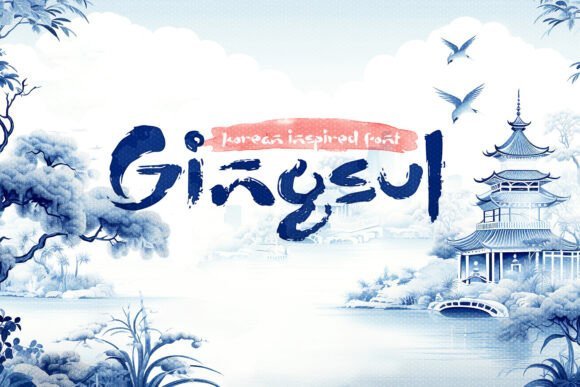
Gingsul is a handmade brush-style font that channels the fluid gestures of traditional Hangul calligraphy into a digitized, expressive face. The strokes display natural bristle textures and variable pressure, producing lively terminals and organic rhythm in each character. This tactile quality gives designs an artisanal, human touch that’s difficult to replicate with mechanical or geometric typefaces.
Because of its calligraphic roots, Gingsul excels in branding, menu headers, cultural event posters, and packaging where authenticity and warmth are priorities. The irregularities and stroke contrast lend emotional weight to short headlines and logo marks, while optional alternates and ligatures can enhance the handwritten illusion. It pairs beautifully with clean, modern sans-serifs that let the brushwork stand out.
Note that legibility drops at very small sizes, so reserve Gingsul for display contexts and accents rather than long-form text. Verify OpenType support for alternates and test web rendering if you plan to use it online. When used thoughtfully, this font brings the grace of Hangul brushwork into contemporary visual systems with charm and personality.
My Recommendation: I’d pick Gingsul for projects that need an authentic, handcrafted feel-restaurant identities, cultural festival artwork, or boutique packaging are perfect fits. The brush texture adds storytelling power and cultural resonance, while alternates let you fine-tune personality. Use it as a headline or logo element and balance it with a restrained sans for body copy to maintain clarity.
22. Wefumi Font
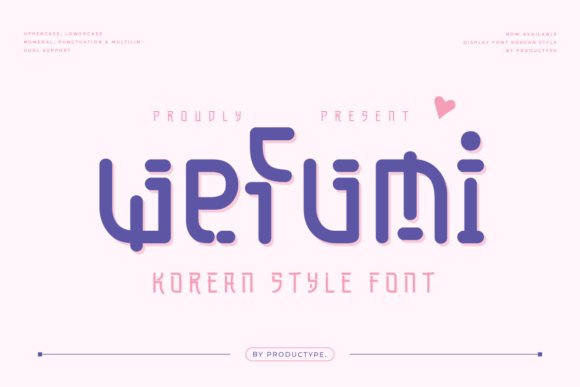
Wefumi is a refined display font that channels delicate brush-inspired forms into contemporary lettershapes. Its flowing terminals and gently tapered strokes evoke traditional aesthetics while remaining crisp and modern, and Wefumi joins the broader conversation among korean fonts by offering decorative cues without sacrificing legibility.
The font shines in logos, premium packaging, and event collateral where an evocative, cultural touch is needed; its character rhythm favors larger sizes and headline uses, letting the graceful curves breathe. Subtle asymmetry in certain glyphs suggests hand-drawn movement, giving compositions a distinct personality without becoming ornate.
Technically, Wefumi pairs well with neutral sans-serifs for body copy and with minimal grid layouts that let the display letters dominate. Use generous tracking for display banners and tighter kerning for stacked wordmarks to preserve the font’s sculptural qualities across print and digital applications.
My Recommendation: I reach for Wefumi when a project needs an elegant, culturally informed voice-think boutique branding, seasonal event posters, or classy editorial covers. Its decorative but readable forms create instant atmosphere and help bilingual layouts feel cohesive when combined with Hangul. For designers wanting a standout display style that still plays nicely with modern grids, Wefumi is a great choice.
23. Lunar Font
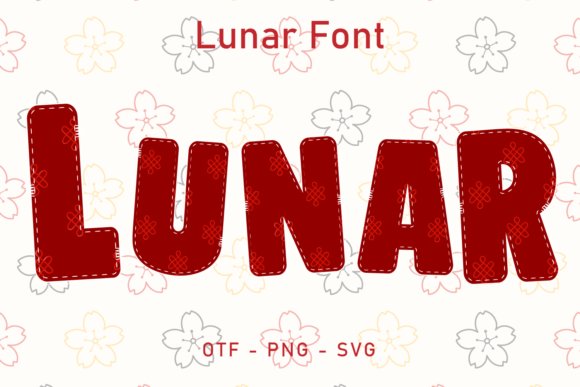
Lunar is a festive, colorful display family crafted for seasonal celebrations across East Asia, including Lunar New Year graphics and multicultural event promotions. It offers both a solid (black) cut for cutting machines and a color version optimized for software that supports multicolor fonts, making it versatile for print, digital, and craft applications.
The black edition is compatible with Cricut Design Space and similar cutting platforms, ideal for vinyl signage, card making, and stencil work. The multi-color variant relies on design programs such as Photoshop, Illustrator, Silhouette, or Inkscape; its OTF/TTF color files are not supported by Cricut, so plan your workflow accordingly and export flattened art when necessary.
Design-wise, Lunar’s playful letterforms and decorative accents work beautifully on invitations, posters, and product labels. Pair it with simple sans-serif text for readability, and reserve the color styles for hero graphics where ornamentation enhances the message rather than competes with it.
My Recommendation: I recommend Lunar when you need instantly celebratory typography for seasonal campaigns, craft projects, or multicultural festival materials. Use the black cut for physical crafts and the color files for bold digital artwork where supported. It’s particularly useful for creatives making event invitations, party signage, or festive packaging that benefit from bright, ornamental lettering.
24. Noodle Kr Font
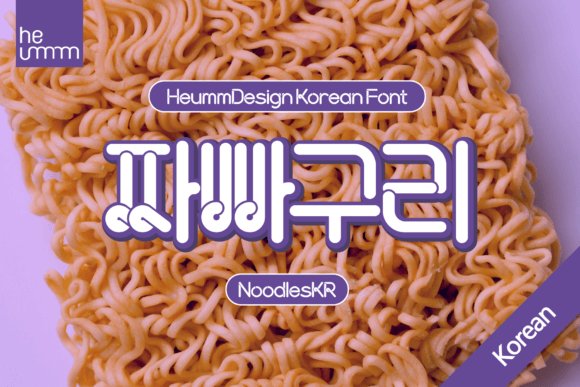
Noodle Kr is a stencil-like sans designed to emulate single-brush stroke construction and clear stroke-order forms. Its large graphemes maximize visibility, while the introduction of soft curves into otherwise straight strokes gives the face a friendly, approachable tone that reads well at display sizes and in short headlines.
The type’s square proportions and slightly rounded terminals create a sturdy, full-bodied texture on the page; double consonants and specific glyph treatments contribute a playful identity without undermining legibility. Noodle Kr includes Hangul support, making it suitable for bilingual layouts that demand consistency and strong character presence.
Practical uses include wayfinding, children’s educational materials, contemporary packaging, and UI headings where clarity and a handcrafted feel are both priorities. It pairs nicely with narrow sans-serifs for body text and with minimalist color palettes to let its structural quirks stand out.
My Recommendation: I’d pick Noodle Kr for projects that need a bold, legible voice with a handcrafted edge-think kids’ books, retail signage, or modern brand identities that lean casual. Its clear grapheme shapes make content accessible on screens and in print, and the subtle curves give it warmth that pure geometric sans fonts often lack. For designers seeking a distinctive sans with native Hangul support, Noodle Kr is a smart, characterful option.
25. Hikiki Kr Font
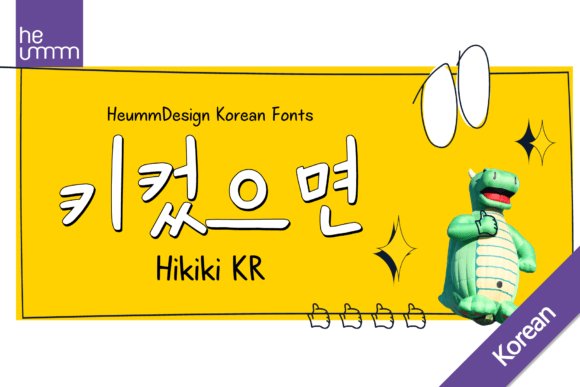
Hikiki Kr is a handwritten script that channels the awkward charm of a child trying on grown-up handwriting. The letterforms feel deliberately informal: soft, rounded terminals and a playful bounce on the baseline give each word a friendly, approachable voice. Notably, the face emphasizes a large initial consonant in Hangul, which creates a visual hook at the start of words and reinforces a lively reading rhythm.
Technically, Hikiki Kr balances legibility and personality – strokes are relatively uniform in weight and the spacing leans generous, so the type reads well at display sizes without feeling cramped. Among korean fonts, Hikiki Kr stands out for that oversized initial consonant motif, which can be used as a typographic accent in logos, posters, and packaging to create instant recognition. For extended paragraphs, the handwriting character becomes decorative rather than utilitarian, so treat it as a headline or short block face.
Pairing Hikiki Kr with a neutral sans or a thin geometric typeface helps temper its exuberance and provides useful contrast in layouts. The font supports Hangul and basic Latin characters plus punctuation, making it practical for bilingual branding and kid-focused editorial work. Pay attention to tracking and line-height when using it in multi-line headlines – a touch more spacing preserves the airy feel and prevents the oversized initials from colliding.
From a design workflow perspective, Hikiki Kr excels when you need warmth without losing clarity: think artisanal product labels, children’s book covers, event invitations, or playful UI headers. Its handwritten imperfections read as intentional, giving projects an honest, handcrafted identity. Before committing, test the initial consonant at multiple sizes and across different backgrounds so the distinctive rhythm remains an asset rather than a distraction.
My Recommendation: I’d reach for Hikiki Kr when a project needs approachable personality-especially for branding aimed at families, lifestyle products, or playful editorial spreads. The exaggerated initial consonants create a memorable focal point that helps short headlines and logos stand out. I avoid it for long body copy, but for tags, headers, and packaging it brings genuine warmth and a handcrafted feel.
Choosing the right Hangul typeface can transform a project, and this collection of 25 selections gives you a fast way to explore styles that work for branding, UI, and print. Use the pairing tips and licensing notes to streamline your design decisions.
Test a few candidates in real layouts, pay attention to readability and character support, and always confirm licensing before release. With these Korean typefaces and practical tips, you’ll be ready to create standout, culturally appropriate designs in 2026.