15 Timeless Paper Fonts for Vintage-Inspired Editorial Design in 2026
Paper fonts are typefaces that imitate the grain, ink spread, and imperfections of real paper and letterpress printing. They give digital layouts a handcrafted feel that suits stationery, book interiors, and artisanal packaging.
This article lists 15 carefully chosen styles, from laid-paper serif faces to rough-edged display types. Each pick includes notes on mood, best-use scenarios, and simple pairing tips so you can match type to material quickly.
1. Note Paper
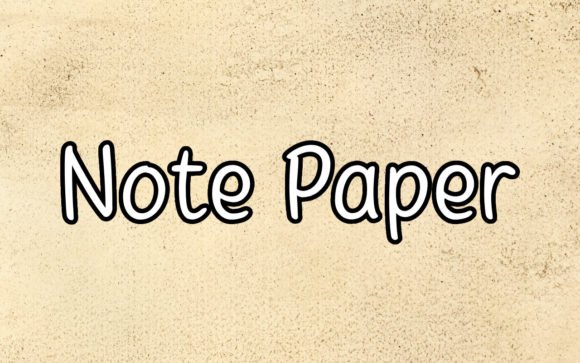
Note Paper brings a tidy, human handwriting style with well-balanced letterforms and consistent stroke widths. Among free Paper fonts available, Note Paper stands out for its clarity at small sizes and its slightly casual slant that keeps designs friendly without losing professionalism. The character set favors open counters and steady spacing, so it reads smoothly in captions, labels, and short headlines.
Apply it to personal stationery, social cards, packaging mockups, or editorial pull-quotes when a handwritten voice is wanted without the mess. Pairing it with a neutral sans or a modest serif tames the personality and keeps hierarchy clean. Files arrive in common desktop formats, which makes integration into print layouts and web mockups straightforward.
My Recommendation: I reach for Note Paper when a project needs a human touch that won’t overpower layout. Its balance between charm and legibility makes it ideal for notes, recipe cards, and brand accents. It’s fast to pair and dependable across screen and print.
2. Paper Curly
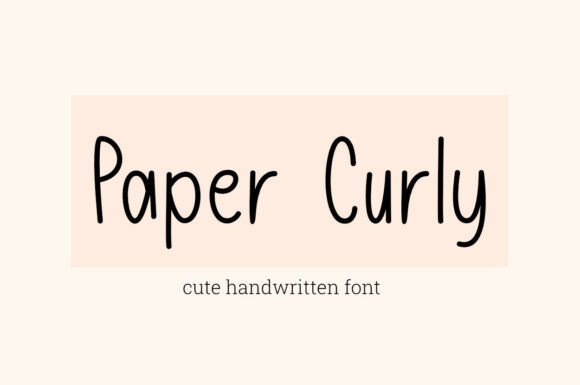
Paper Curly channels the warmth of casual penmanship through slender monoline strokes, soft organic curves, and a generous x-height that improves readability for display use. Letters carry a slightly irregular rhythm and rounded terminals that read playful without feeling immature. The overall voice feels personal, like a tidy note added by hand.
It excels on nursery prints, playful packaging, social headers, and creative journaling where a friendly handwritten tone is desired. Because of its tall proportions, it works best for short headlines and nameplates but needs careful tracking for longer lines. Pair it with a restrained sans or a light slab to provide visual contrast and structure.
My Recommendation: I use Paper Curly when a design needs a soft, personable look-especially for kids’ products and boutique stationery. Its tall x-height keeps copy legible in tight spaces, while the monoline strokes make reproduction simple. It gives projects an inviting face without becoming gimmicky.
3. Paper Note
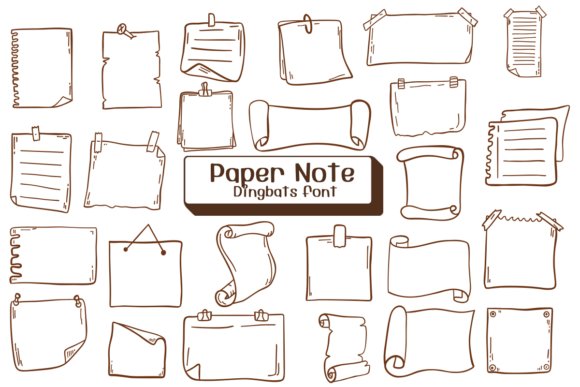
Paper Note is a dingbats set that mimics quick hand-sketched marks and tiny illustrations, useful for adding handcrafted accents. These glyphs work well sprinkled through wedding suites, craft tags, or as decorative dividers in invitations and zines. The sketchy character weight complements textured paper and layered collage-style layouts.
As a symbol font, it lets you recolor, resize, and repeat motifs without creating extra artwork, which is handy for small studios and DIY hobbyists. Use it for stamp-like emblems, bullet replacements, or playful separators in planners and social posts. Pair with a clean serif or a gentle script to maintain clear reading order while adding quaint embellishment.
My Recommendation: I keep Paper Note on hand for projects that need handmade personality but where custom illustration isn’t an option. It’s an efficient way to introduce crafted details into stationery, packaging mockups, and craft fair signage. I often pair it with a simple typeface to avoid visual clutter.
4. Paper Easter
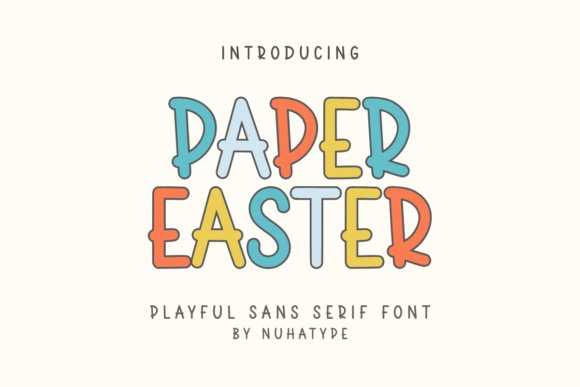
Paper Easter is a thin, minimalist sans serif whose letterforms echo careful, human handwriting: narrow strokes, open counters, and tiny irregularities that feel handcrafted rather than mechanized. It performs well in planner spreads, interior KDP layouts, journals and Cricut projects where a light, airy title keeps pages calm and refined.
Technically it comes as a single-weight face with well-considered spacing and predictable kerning, so pairing is straightforward and production files remain small; the clean outlines also export neatly for vinyl cutting and heat-transfer applications. Use it alongside chunkier scripts or geometric sans for contrast-Paper fonts for small surfaces like stickers, tumblers, and tote tags where subtle personality matters.
My Recommendation: I reach for Paper Easter when I want headings that feel personal but not fussy; the thin strokes give breathing room around illustrations and layouts. It’s especially handy for printable planners and craft labels because it cuts cleanly for vinyl and heat-transfer work. If you need neat, humanized type without heavy ornament, this font is a quick, dependable choice.
5. Paper Crown
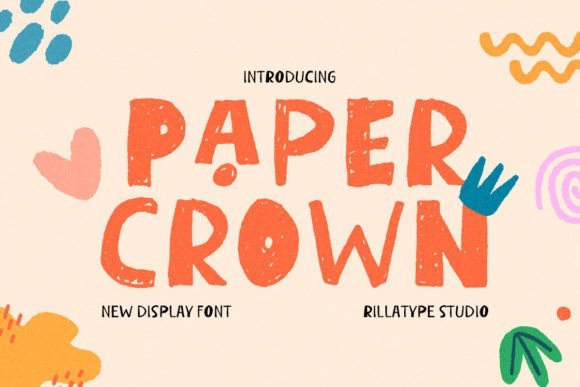
Paper Crown reads like a lively ink sketch: bold uppercase characters sit beside slender, hand-drawn lowercase to create an immediate visual rhythm and playful contrast. The uneven baseline and subtle ink textures give the face a handcrafted charm that suits children’s book covers, party posters, and invitations that want to feel approachable and energetic.
The font includes lively alternates and generous spacing that hold up at large display sizes and when printed on textured stock, making it ideal for signage and packaging where personality needs to lead. Pair Paper Crown with a neutral body type to maintain readability, or let it stand alone for logos and headings that benefit from a handcrafted voice.
My Recommendation: I pick Paper Crown when a project needs character and a bit of mischief-its mixed-case contrast is perfect for kid-focused work and event graphics. It prints beautifully on matte card and keeps attention on headlines without overwhelming other elements. Use it for posters, invites, and playful product labels where charm matters most.
6. Paper Flowers
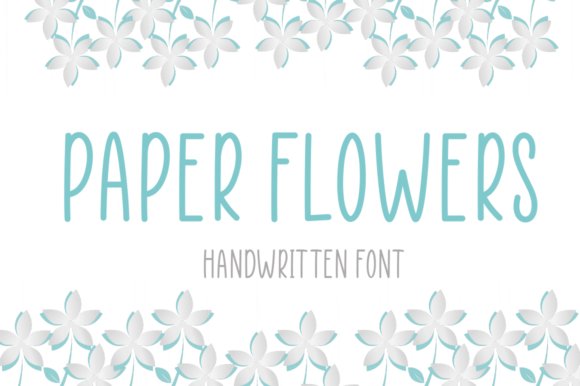
Paper Flowers is a warm, friendly handwritten script with rounded strokes and a gentle slant that make text feel intimate and sincere. Thoughtful ligatures and natural connections between letters produce smooth word shapes that remain readable at moderate sizes, which makes this a great pick for greeting cards, social posts, and boutique product tags.
The face ships with alternates that mimic pen pressure and subtle rhythm, giving designs an authentic handmade look without sacrificing clarity. It pairs especially well with a restrained serif or a plain geometric sans for balance and imports cleanly into embroidery and vinyl workflows for tangible goods.
My Recommendation: I use Paper Flowers when I want a human touch that still reads clearly-perfect for handmade cards, product labels, and cozy social content. Its natural rhythm adds personality without creating legibility issues, even at smaller sizes. For a warm accent or a primary script, this font brings friendly character to refined layouts.
7. Paper Frame Font
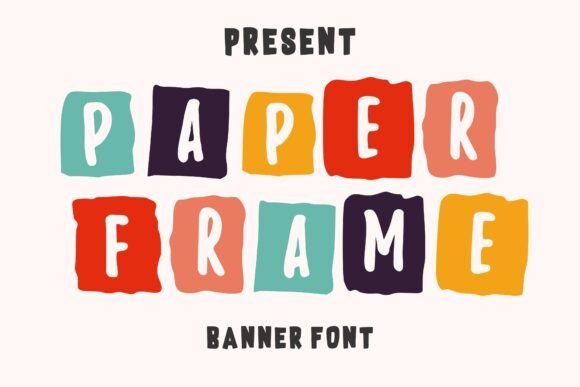
Paper Frame dresses each glyph in a hand-cut, slightly irregular border so the text reads like a string of craft-store banners. The stacked edges and gentle wobble of the frames give headlines a layered, tactile presence that works especially well for party invites, children’s books, and playful retail signage. As a member of the Paper fonts family, it brings a friendly, homemade attitude without sacrificing clarity at display sizes.
Color swaps across individual frames create an instant multi-colored banner effect, letting you compose energetic combinations or keep a muted palette for calmer charm. It pairs cleanly with rounded sans serifs that offer rest between the framed letters, and the generous proportions reproduce nicely in print, stickers, and social graphics where a collage-like aesthetic is desired.
My Recommendation: I reach for Paper Frame when a brief needs to feel handcrafted and joyful-birthday invites, toy packaging, or classroom posters are ideal. The framed letters cut through imagery and add tactile personality, while the large counters stay readable in small runs. Use bright color mixes for party themes or single-color runs for merchandise and the look still reads as intentionally made by hand.
8. Paper Cut – Paper fonts Display Font
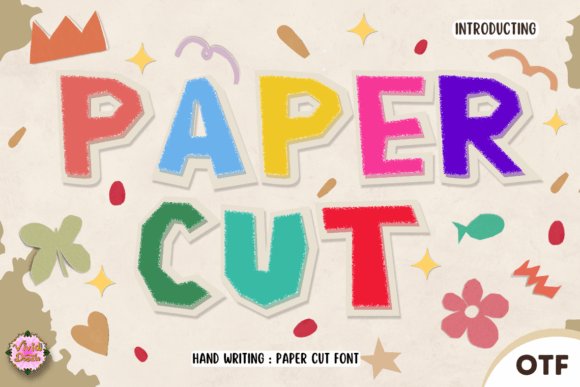
Paper Cut channels the look of scissors-and-paper lettering with deliberate inner cuts and uneven edges that read as handmade at larger sizes. The negative spaces and crisp contours give each character a bold silhouette that performs strongly on posters, labels, and editorial covers. It favors display use where the carved details can be appreciated.
Set against solid backgrounds or photographic textures, the type’s cutout quality creates striking contrasts that catch the eye without extra effects. For balanced layouts, pair it with a neutral serif or a restrained grotesk to keep long text calm while letting the display letters carry the attitude and graphic punch.
╰┈➤ Download Paper Cut – Paper fonts Display Font
My Recommendation: I choose Paper Cut for projects that need expressive, tactile headlines-think indie record sleeves, craft-market posters, and boutique signage. It provides a handcrafted edge that reads clearly at scale and stands out without complex treatments. If you want a typeface that feels physical and sculpted, this one delivers that personality cleanly.
9. Paper Sticker Font
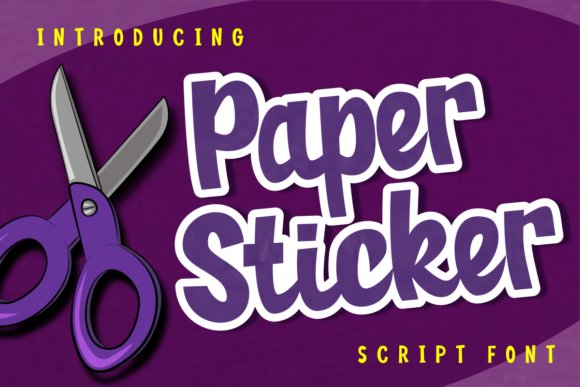
Paper Sticker is a bold, hand-drawn face with the weight and bounce of a marker scrawl shaped into sticker-style forms. Rounded terminals and generous strokes make it highly legible while a slight irregularity keeps the voice approachable and human. Built to read instantly, it’s an effective choice for labels, badges, and short bursts of copy.
The face holds up well at small sizes on packaging and tags and scales confidently for hero graphics or badges on product photos. Add a simple outline or drop shadow to reinforce the peel-off sticker look, then pair with a minimal sans to avoid competing details around the text.
╰┈➤ Download Paper Sticker Font
My Recommendation: I use Paper Sticker when projects need upbeat, quick-to-read hand-lettering-packaging labels, promo stickers, and UI badges all benefit. The bold strokes reproduce well in print and digital thumbnails, and the subtle wobble lends warmth without sacrificing readability. It’s a go-to when you want friendly personality that photographs and prints reliably.
10. Paper Block
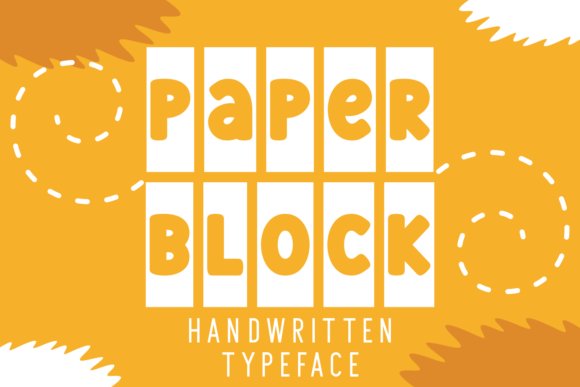
Paper Block is a display face built from bold geometric shapes and slightly rounded corners that mimic sheets of cut paper. Letters sit with firm, uniform widths and short counters, which gives headlines a compact, graphic punch without feeling heavy. The overall effect reads like die-cut signage-clear at distance, interesting up close.
For designers assembling signage, posters, or modern stationery, Paper Block fits neatly with bold display sets and pairs well with light sans serifs for body copy. When you gather Paper fonts into a toolkit, Paper Block stands out for tight tracking and predictable kerning, so setting dense all-caps blocks is straightforward. Add a subtle paper grain or a soft drop shadow in print to reinforce the tactile cut-paper vibe.
My Recommendation: I reach for Paper Block when a project needs strong, compact headings that remain legible at a glance. It shines on posters, product labels, and wayfinding where clarity and a graphic presence matter. I usually pair it with a neutral body face to avoid visual competition and add a paper texture when printing to emphasize the concept.
11. Valentine Paper
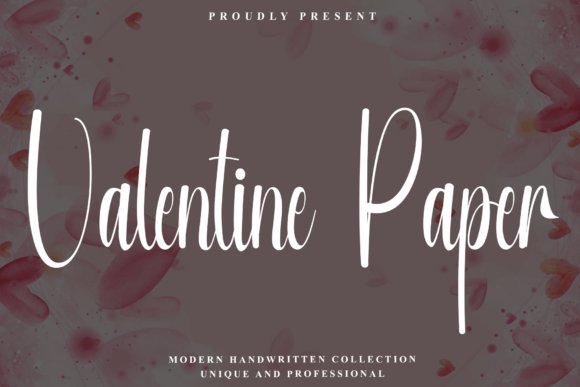
Valentine Paper favors tall, narrow letterforms with a slight rightward slant that echoes practiced pen strokes. Hairline terminals and modest stroke contrast keep it readable while preserving a refined handwritten personality. The result is a script that feels composed and approachable rather than ornate.
OpenType alternates and loose ligatures create a pleasing rhythm in longer headlines and help avoid repetitive patterns in display use. On screen, generous line-height preserves the airy character; in print, pairing it with warm paper stocks gives the letters added presence. Test a few point sizes first-its slim profile rewards scale but can vanish at very small sizes.
My Recommendation: I use Valentine Paper when I want a subtle handwritten voice that reads clearly across mediums. It works well for travel captions, boutique branding, and elegant web headers where personality is needed without fuss. Keep it at display sizes and pair with a restrained sans for balanced contrast.
12. Love Paper
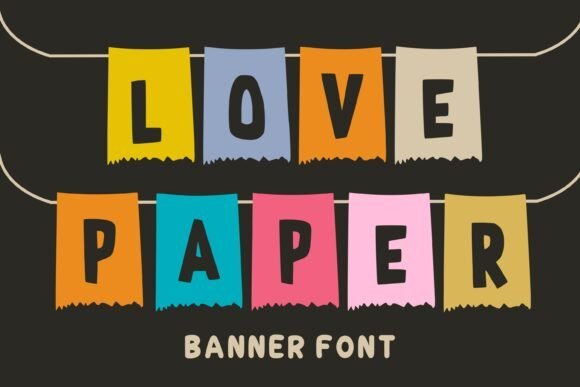
Love Paper channels handmade festival flags into a display font rich with playful imperfections. Each glyph reads like a hand-cut pennant, with slightly uneven terminals and a bouncy baseline that suggests motion along a string. That handcrafted energy makes the font feel warm and approachable for family- and event-focused projects.
Because Love Paper performs best at larger sizes, it’s ideal for party invites, banners, and packaging headers where personality carries the message. Layering a thin stroke or offset shadow helps maintain legibility over photos while keeping the cut-paper look intact. Pair it with neutral sans serifs for balance or textured backgrounds to push a fully artisanal aesthetic.
My Recommendation: I pick Love Paper for projects that need a handcrafted, celebratory tone-think birthday suites, market signage, and playful packaging. Its banner-like shapes immediately communicate festivity and care, which helps engage audiences quickly. For print jobs I choose heavier stock and consider spot varnish to highlight the playful contours.
13. Paper Font
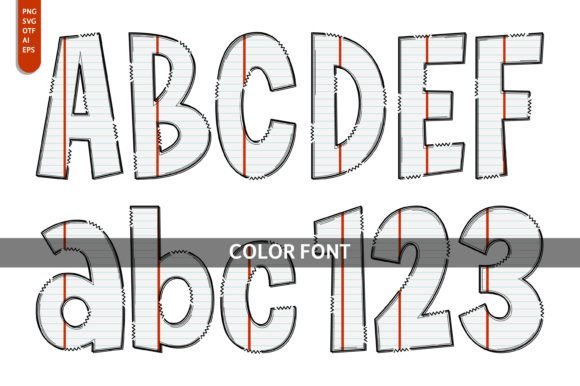
Paper is an OpenType-SVG color font that places multi-layered artwork into each glyph, giving letters a handcrafted, collage-like texture ideal for children’s books, greeting cards, party invitations and playful posters. This format runs inside PhotoShop, Illustrator, Inkscape and Silhouette; note that OTF and TTF exports are not included and will not operate on Cricut machines. Paper fonts bring color-rich letterforms that read like textured cut paper, making them useful when you want typography with an artisan feel.
Because each glyph contains bitmap artwork, scaling behavior depends on the host application – raster scaling in Photoshop differs from vector-capable editors like Illustrator. If you need Cricut-ready lettering you’ll need to rasterize or trace outlines after exporting, or reserve this file for digital mockups and print pieces that accept SVG color fonts. Test a few sample words at the sizes and export settings you plan to use so you can judge color saturation, edge crispness and how the artwork layers interact with your backgrounds.
My Recommendation: I reach for Paper when a project needs joyful, tactile lettering that looks handmade without building layers by hand. It saves time on textured headlines and is excellent for party stationery, children’s content and promotional art that benefits from color glyphs. Just test exports early if you plan to move artwork into cutting or production workflows.
14. Chibelle Font
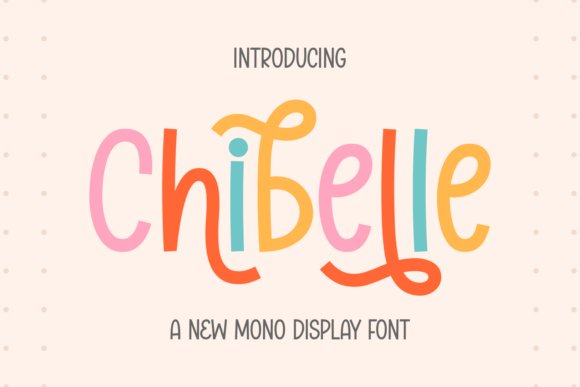
Chibelle is a monoline script with consistent stroke weight and smooth connections that feel like a steady pen on good paper. Rounded terminals and a gentle bounce give the type a friendly, intimate tone that suits wedding invites, boutique labels and hand-lettered logos. It reads cleanly in short headlines and decorative accents without calling for heavy ornamentation.
The even strokes preserve legibility at small sizes while larger uses expose the subtle quirks in joins and tails that make it feel human. Use Chibelle alongside a clean sans to provide contrast, or layer it over textured backgrounds to add warmth. Its personality works well for brands and stationery that want a handcrafted voice without overwhelming supporting elements.
My Recommendation: I use Chibelle when a design needs approachable handwriting that remains tidy and readable. It’s well suited to invitation suites, boutique packaging and social graphics that want a personable, gentle script. Pairing it with simple sans companions and natural paper textures helps the script sing without cluttering the layout.
15. Paper Rabbit Font
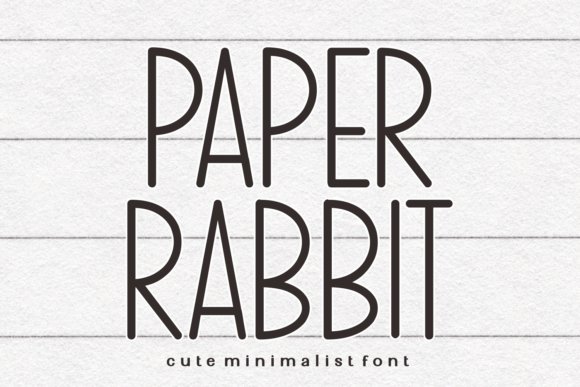
Paper Rabbit is a slender sans serif influenced by handwriting, with narrow strokes and open counters that offer an airy, hand-touched look in contemporary compositions. The type keeps a clean presence in planners, journals, stickers and labels where space is limited but a personal touch is desired. Its thin weight reads as delicate on mugs, tumblers and tote prints, especially when combined with bolder display elements.
Because of its minimal skeleton, this face pairs well with textured backdrops or playful scripts to avoid feeling too clinical. It exports as standard OTF/TTF for Cricut and craft printing and tends to cut neatly for vinyl applications at medium sizes. Apply modest tracking and check kerning on curved surfaces to maintain readability on narrow labels and wraps.
╰┈➤ Download Paper Rabbit Font
My Recommendation: I pick Paper Rabbit for projects that need a modern, handwritten appearance without extra frills. It works particularly well for planner layouts, small-batch product labels and DIY vinyl decals where narrow letterforms save space. For packaging or interior mockups, its subtle lines provide personality while keeping the overall design restrained.
These 15 selections cover a wide range of paper-like moods – from soft, recycled-kraft looks to bold, letterpress-ready expressions. Use the pairing tips and usage notes to match type to your project’s tactile goals.
Before using any font commercially, check its license and test on sample artwork or mockups to confirm how the texture reads at different sizes and on varied paper stocks.